
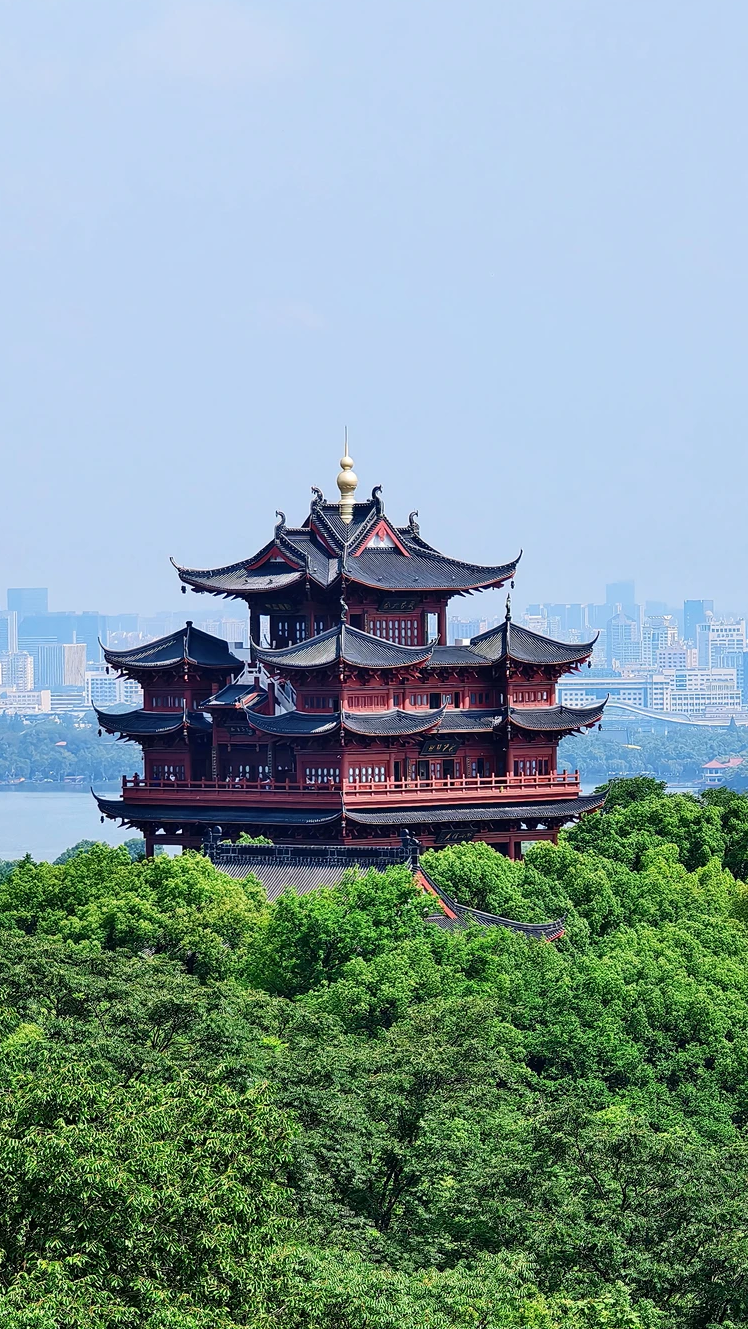
Chenghuang Pavilion, located at the peak of Wushan (Chenghuang Hill) in Shangcheng District, Hangzhou, is a landmark classical-style pavilion offering unparalleled views of West Lake, Qiantang River, and panoramic vistas of Hangzhou. It stands not only as a scenic viewpoint but also as a repository of deep-rooted folk beliefs and urban memories.
Historical Background
Wushan has been the site of Hangzhou’s Chenghuang (City Guardian) since ancient times, with locals traditionally visiting to “tour Wushan and pay homage to Chenghuang.”
- The original Chenghuang Temple was established during the Southern Song Dynasty and remained a popular pilgrimage site through the ages until it was destroyed by war.
- The current Chenghuang Pavilion was reconstructed in 1999, designed by renowned architect Guo Daiheng (a disciple of Liang Sicheng). It blends Tang-Song architectural styles with modern structural techniques, successfully recreating its ancient charm while serving contemporary functions.
Architectural Features
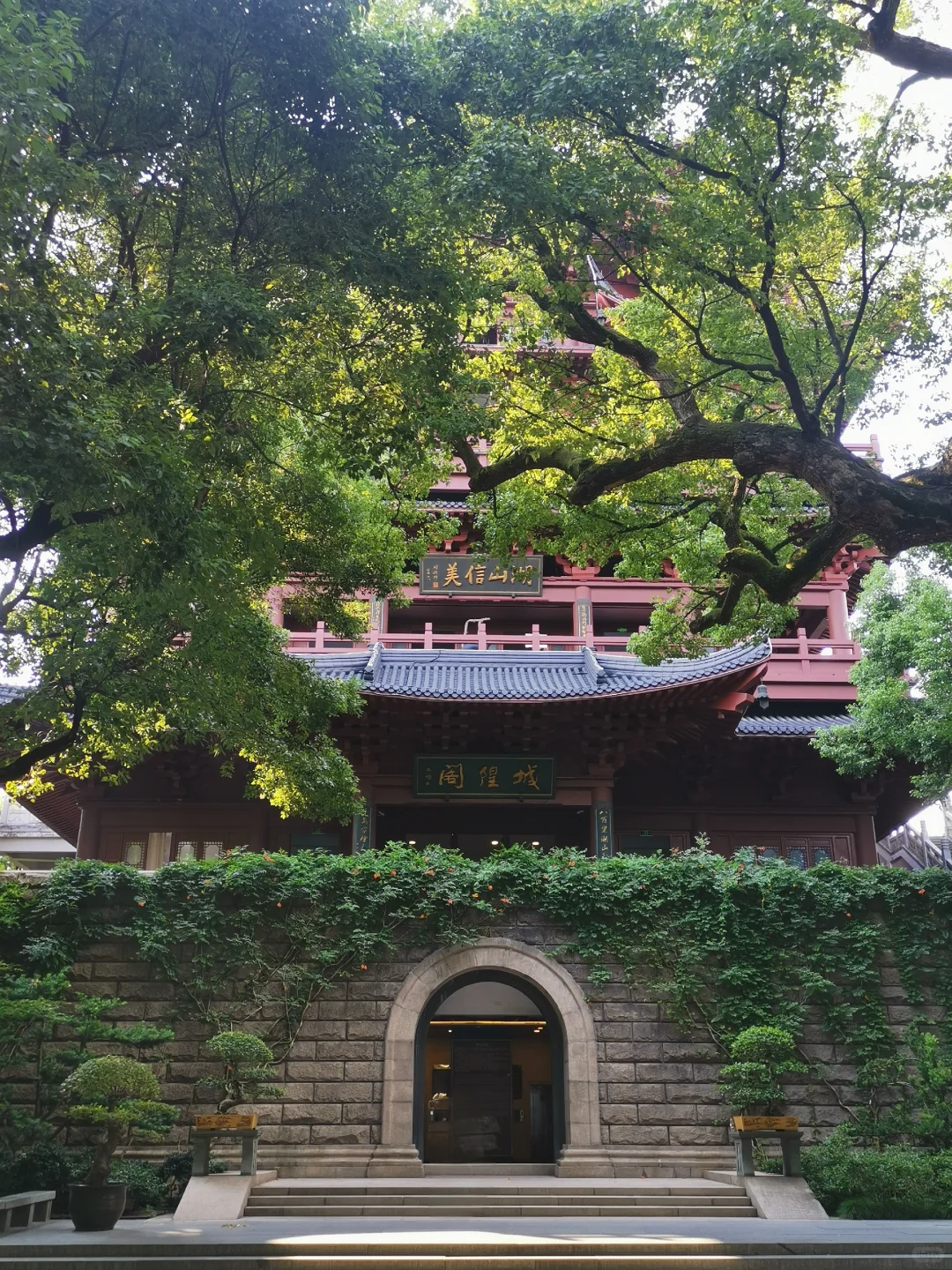
- Standing at 41.6 meters tall, the six-story structure (five above ground and one below) features a reinforced concrete frame designed to resemble traditional wooden construction. Its eaves curve elegantly upwards, and the entire building shines in gold.
- The exterior showcases a majestic three-tiered hip-and-gable roof, while inside, elevators and spiral staircases provide easy access for visitors.
- The roof is covered with golden glazed tiles that, when illuminated at night, transform the pavilion into the “Lantern of Wushan,” a beacon in the city’s night skyline.
Viewing from the Pavilion
The top-floor observation deck offers a 360-degree unobstructed view:
- To the west: West Lake, Leifeng Pagoda, and Baochu Pagoda come into full view.
- To the east: Qiantang River, Fuxing Bridge, and the Olympic Stadium’s “Lotus Bowl” stretch out before you.
- To the north: Hefang Street, Drum Tower, and remnants of the Southern Song Imperial City emerge amidst the bustling streets.
- To the south: Wan Song Ridge and Yuhuang Mountain unfold in layers of greenery.
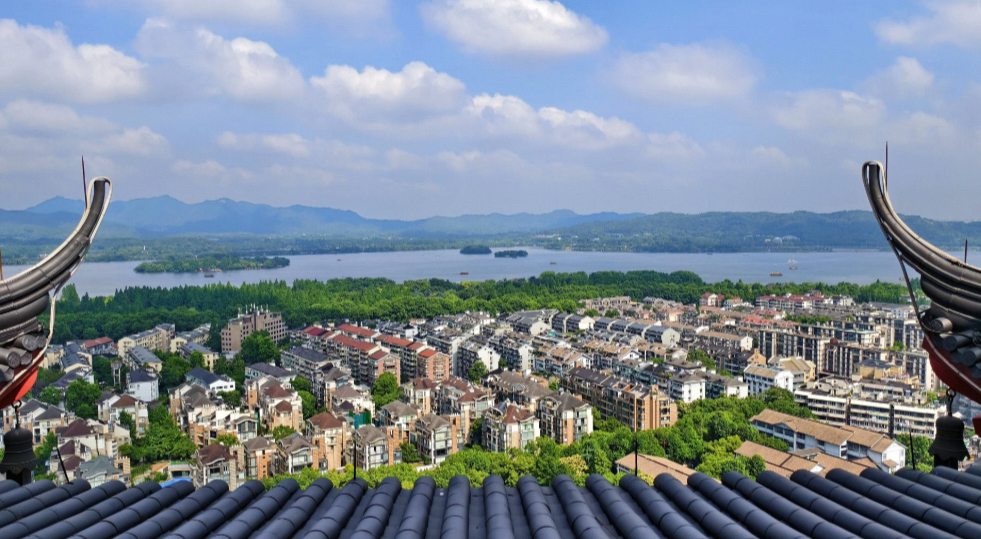
The ancient description of Wushan—”Left lake, right river; front city, back mountain”—is vividly brought to life here.
Cultural Significance
Inside the pavilion, exhibits on Wushan culture showcase local traditions such as Chenghuang worship, Wu-Yue history, and Southern Song customs.
- Remnants of the Southern Song city walls are preserved on the lower levels, bearing witness to Hangzhou’s thousand-year-old status as a significant southeastern metropolis.
- Every year on the 24th day of the seventh lunar month (the birthday of Chenghuang), traditional temple fairs are held on Wushan, filled with prayers and festive celebrations.
Practical Information
- Location: No. 18, Wushan Square, Shangcheng District (atop Wushan)
- Transportation: Exit C of “Wushan Square Station” (Metro Line 7), then walk about 10 minutes up the steps; alternatively, ascend from Hefang Street entrance.
- Opening Hours: 8:00 AM – 5:30 PM (last entry at 5:00 PM)
- Admission Fee: Approximately ¥20 per person (please check official announcements for updates)
- Best Photo Spot: Visit during dusk to capture both the sunset over West Lake and the twinkling lights of the city.
Tip: Combine your visit to Chenghuang Pavilion with a stroll around Wushan Square, Hefang Street, and the Southern Song Imperial Street for a half-day itinerary that lets you experience the vibrant street life and poetic beauty of old Hangzhou.

Join The Discussion